Table of Contents
Buyer's Advisory:
Purchasing a genuine leather jacket online offers access to wider collections and bespoke tailoring at direct-to-consumer prices. However, navigating product descriptions filled with ambiguous buzzwords like “genuine leather” requires technical knowledge. This connoisseur’s checklist equips you to evaluate leather grades, sizing charts, hardware authenticity, and craftsmanship standards with total confidence.
Decoding Leather Grades: Don’t Be Deceived by “Genuine Leather”
One of the most common misconceptions in retail outerwear is that the label “Genuine Leather” signifies top-tier luxury. In the tanning industry, leather is categorized into distinct strata of quality:
1. Full-Grain Leather (The Gold Standard)
Full-grain represents the outermost surface of the animal hide, where the collagen fibers are most densely packed. The natural grain surface is completely un-sanded and un-buffed, retaining its unique microscopic pore patterns and natural characteristics. Over time, full-grain leather does not crack or peel; instead, it develops a deep, lustrous patina that becomes richer each year.
2. Top-Grain Leather (Premium & Uniform)
Top-grain leather undergoes light sanding on the very top layer to eliminate minor surface scars or blemishes, followed by a light protective coating. It is slightly thinner and more flexible than full-grain, offering a pristine, uniform appearance while retaining exceptional durability and weather resistance.
3. “Genuine Leather” / Split Leather (Commercial Grade)
Often sourced from the weaker lower split layers of the hide after the grain layer has been shaved off. These fibers are heavily coated with polyurethane embossing to simulate real grain. While technically real animal hide, split leather lacks tensile strength and is prone to surface peeling within a few years of wear.
4. Bonded / Faux Leather (Synthetic Polyurethane)
Scrap leather fibers pulverized and glued together with toxic adhesives onto plastic backing. Avoid entirely if you seek an investment jacket that lasts.
The 5-Point Online Quality Inspection Checklist
Before completing your purchase, evaluate the retailer and product specifications against these 5 critical craftsmanship checkpoints:
| Inspection Area | Hallmark of High Quality | Red Flag / Cheap Shortcut |
|---|---|---|
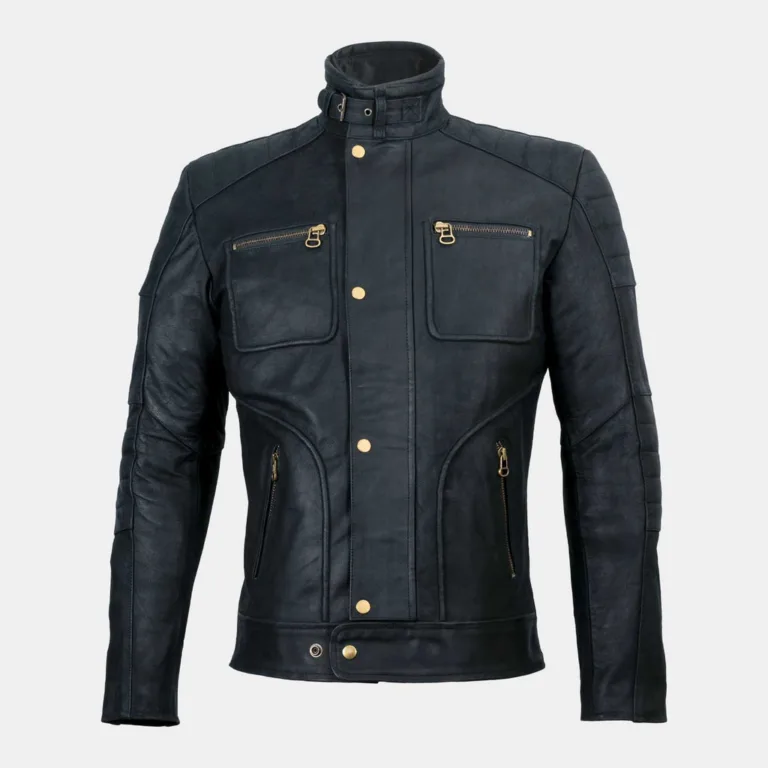
| Hardware Brand & Gauge | Heavy metal YKK, RiRi, or Talon zippers; solid brass snaps with reinforced backings. | Unbranded lightweight zinc alloy zippers; hollow stamped tin snaps that pull through leather. |
| Stitch Density (SPI) | Tight, consistent bonded nylon stitching at 8 to 10 stitches per inch (SPI). | Loose, erratic stitching below 6 SPI with visible thread unraveling at pocket corners. |
| Panel Size & Seams | Large single-piece leather back panels requiring premium whole hides. | Excessive patchwork seams used to salvage cheap small scrap leather pieces. |
| Edge Finishing | Skived and folded seam allowances; hand-painted edge burnishing. | Raw, fuzzy, fraying edge cutouts showing synthetic backing layers. |
| Custom Sizing Availability | Bespoke made-to-measure tailoring option to fit individual proportions. | Rigid S/M/L sizing only with zero accommodation for torso drop or sleeve length. |
How to Measure Yourself Accurately at Home
The single most frequent reason for online apparel returns is incorrect sizing. Never guess your jacket size based on your T-shirt size. Instead, use a flexible tailor’s tape measure (or a string and ruler):
- Chest Measurement: Stand upright with arms relaxed at your sides. Measure under your arms around the fullest part of your chest. Add 2 to 3 inches to your bare chest measurement to determine your ideal jacket chest width for comfortable layering.
- Shoulder Width: Measure horizontally across the upper back from the outermost edge of the left shoulder seam to the right shoulder seam.
- Sleeve Length: Measure from the top tip of your shoulder down the outer arm to just past your wrist bone (the base of your thumb).
At Leather Jackets USA, we review your measurements before cutting leather to guarantee a flawless drape.

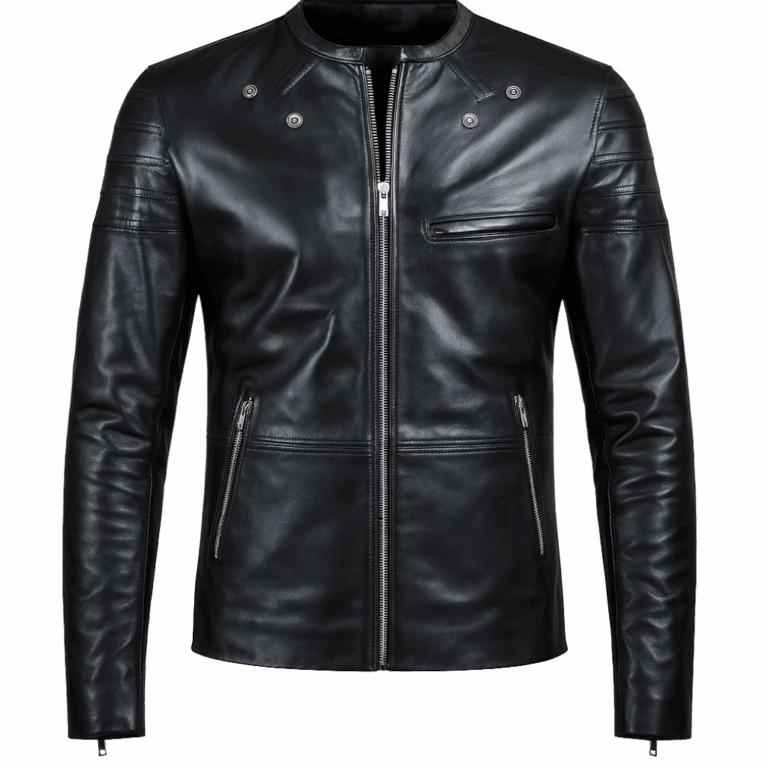
Frequently Asked Questions
Look for natural grain variation and subtle pore patterns across different panels. Faux leather features a repeating mechanical stamped pattern that looks unnaturally identical across every square inch.
A new full-grain leather jacket should feel snug across the shoulders and chest without causing pain or restricting breathing. Over the first few weeks of wear, body heat and movement will naturally stretch and break in the leather to mold to your body.
Always choose retailers with transparent return and remake policies that stand behind their craftsmanship. At Leather Jackets USA, we provide dedicated customer sizing support and a 30-day satisfaction guarantee.