
Table of Contents
Rider's Advisory:
A motorcycle leather jacket is first and foremost personal protective equipment (PPE). While fashion jackets prioritize thinness and softness, authentic riding jackets are engineered from heavy-duty 1.2mm to 1.4mm abrasion-resistant cowhide with reinforced seams, functional riding gussets, and impact protection. This guide details the critical safety anatomy that protects riders on the asphalt.
The Difference Between Fashion Bikers & Real Motorcycle Gear
While fashion stores sell jackets with asymmetrical zippers, most are constructed from thin 0.6mm lambskin that shreds within milliseconds of asphalt abrasion. A true motorcycle leather jacket is engineered specifically to withstand the brutal frictional forces of high-speed slides.
High-grade motorcycle jackets balance three vital criteria: abrasion resistance, impact absorption, and ergonomic riding flexibility.
Key Safety Components of an Authentic Riding Jacket
1. Hide Weight & Thickness (1.2mm – 1.4mm)
The standard benchmark for road safety is heavy-weight, top-grain or full-grain cowhide measuring between 1.2mm and 1.4mm (approx. 3.0 to 3.5 ounces per square foot). At this thickness, cowhide provides exceptional burst strength and thermal friction dissipation during a slide.
2. Bi-Swing Action Back & Shoulder Gussets
When reaching forward toward motorcycle handlebars, standard jacket sleeves pull up and create binding tension across the upper back. An authentic riding jacket features inverted pleats or accordion leather gussets behind the shoulders (a bi-swing back) that expand effortlessly as you reach for the grips, keeping the sleeves anchored at your wrists.
3. Drop Tail Kidney Extension
In a standard riding crouch, normal waistbands ride up and expose the lower back to cold wind and debris. A properly tailored motorcycle jacket includes an extended lower rear hem (drop tail) that shields the lumbar region and keeps drafts out.
4. Asymmetrical Double-Rider Lapels & Wind Flaps
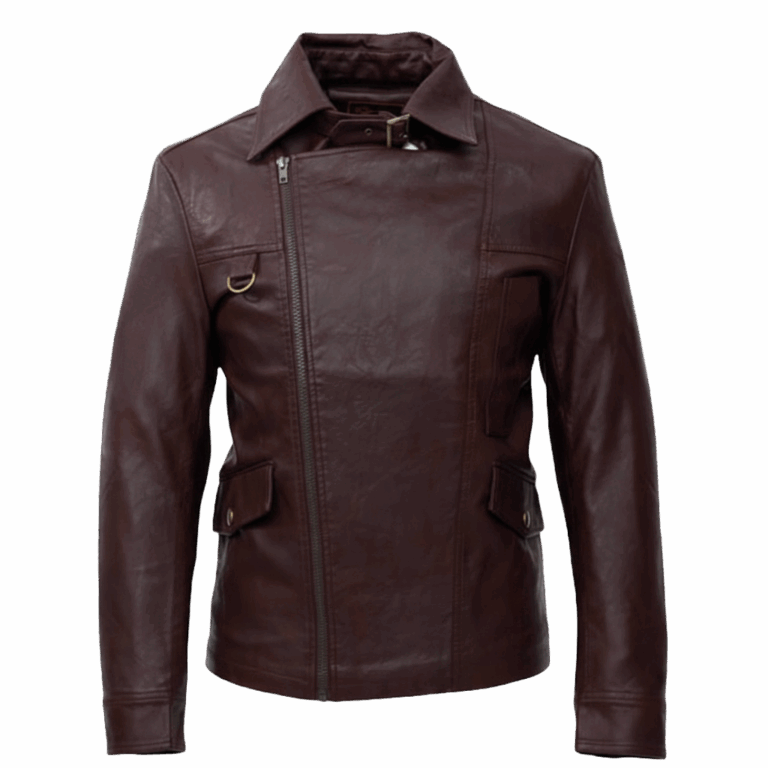
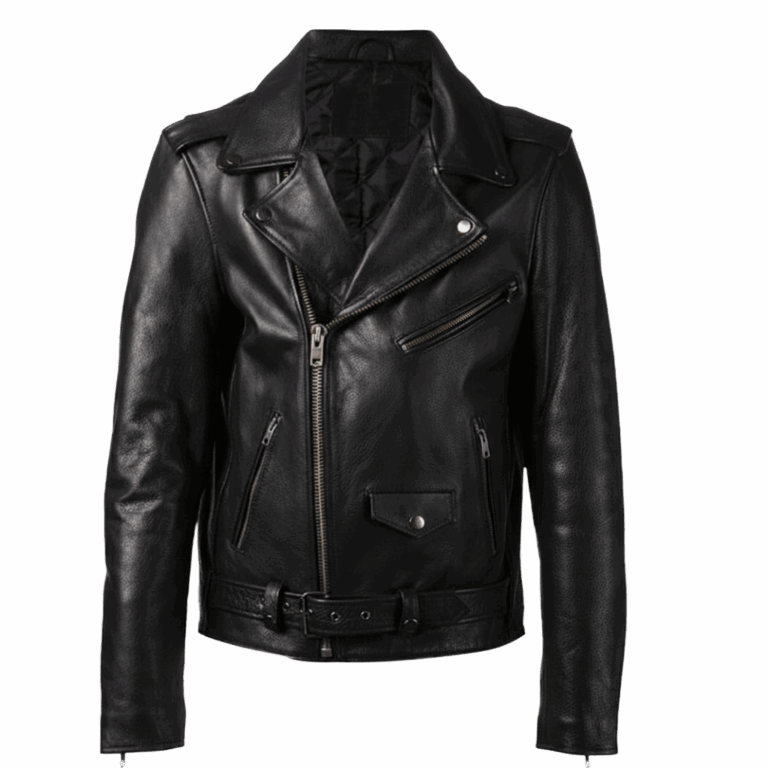
First popularized by the iconic 1928 Perfecto design, the asymmetrical diagonal zipper creates an overlapping double layer of thick cowhide directly across the rider’s chest. When zipped fully to the collar, wind cannot penetrate the zipper teeth.
Safety & Hardware Comparison
| Feature | Road-Grade Motorcycle Jacket | Fashion-Only Biker Jacket |
|---|---|---|
| Hide Thickness | 1.2mm – 1.4mm Heavy Cowhide | 0.6mm – 0.8mm Thin Lambskin |
| Seam Construction | Safety stitched with bonded nylon thread; hidden safety seams. | Single-row cotton or standard polyester stitching. |
| Armor Pockets | Internal pockets for CE Level 1/2 armor in shoulders, elbows & back. | No armor provision or padding support. |
| Zippers & Pulls | Heavy-gauge #10 YKK brass zippers with glove-friendly leather pulls. | Lightweight #3 or #5 commercial zinc zippers. |

Frequently Asked Questions
Yes! Once broken in, heavy cowhide softens and molds to your frame. It provides a substantial, masculine silhouette that looks phenomenal with heavy denim and heritage boots.
The best way to break in heavy leather is consistent wear. Flexing your arms, wearing the jacket during daily walks, and applying a light natural leather conditioner will accelerate the break-in process without compromising hide integrity.